
Arnica for Muscle Relief: What It Does (And What It Doesn’t)
You pulled something.
Lifted something.
Slept wrong.
Sat too long.
Exist in a body long enough and something eventually objects.
So you Google:
“Does arnica actually work?”
Fair question.
Arnica is one of those ingredients that’s everywhere — creams, gels, salves, balms — usually sitting confidently next to words like soothing and relief.
But what does it actually do?
Let’s talk about it.
What Is Arnica?
Arnica (Arnica montana) is a flowering plant that’s been used topically for centuries to support muscle recovery and ease temporary soreness.
Important word: topically.
Arnica is meant to be applied to the skin — usually in salves, oils, or creams. It is not something you take internally unless specifically prepared and directed by a professional.
Traditionally, it has been used for:
Bruising
Muscle soreness
Strains
Overworked tissue
Modern herbal formulations still rely on arnica for one primary reason:
It supports the body’s natural recovery process.
Not by overriding it.
Not by numbing it.
But by working alongside it.
What Arnica Is Known For
Arnica is commonly used to support:
Natural muscle relief
Recovery after physical strain
Localized circulation in the area applied
Temporary soreness from workouts or daily wear
If your shoulders feel like they’ve been holding the weight of the week, or your lower back is protesting your desk setup, arnica-based herbal salves can offer targeted support where you actually need it.
This is especially helpful when muscle tension lingers — not as an emergency, but as a steady, background ache.
Stress doesn’t just stay mental.
It settles into the body.
Tight neck.
Clenched jaw.
Rigid upper back.
When that tension hangs around, topical support makes sense.
For sore, overworked muscles, herbal salves featuring arnica can offer practical, localized support without synthetic ingredients.
What Arnica Does Not Do
Let’s clear something up.
Arnica is not:
A numbing agent
An instant eraser of pain
A substitute for medical care
A “stronger is better” ingredient
If you’re looking for immediate shutdown relief, arnica isn’t built for that.
It’s not force.
It’s support.
It works best when used consistently and as part of a broader recovery rhythm — movement, hydration, rest, mineral support, and yes, sometimes a salve layered on top.
That layered approach matters.
Because your body isn’t a machine that needs silencing.
It’s a system that needs support.
When an Herbal Salve Makes Sense
Topical arnica support is especially helpful when:
Muscles feel tight from stress
You’re sore after workouts
Repetitive strain is building
Desk posture has consequences
You slept in a position your neck did not approve
Applying an herbal salve allows you to support a specific area directly — instead of trying to override the entire system.
It’s practical.
Targeted.
And easy to integrate into daily life.
A few minutes of massage into the shoulders before bed.
A little support on lower back after yard work.
Calves after a long hike.
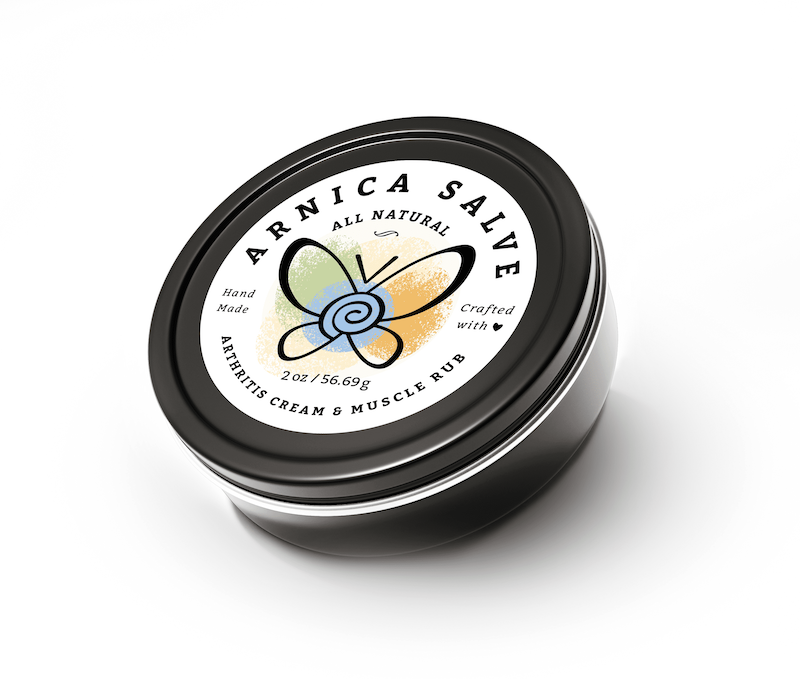
For targeted support, herbal salves featuring arnica can help soothe sore, overworked muscles without synthetic ingredients.
Small signals of recovery add up.
Why Topical Support Matters
There’s something powerful about localized care.
When you apply a salve to a specific area, you’re telling your body:
“I see this. Let’s support it.”
That matters.
Especially in a culture that defaults to suppression instead of support.
Natural muscle relief isn’t about eliminating sensation.
It’s about helping the body recalibrate.
Less force.
More steadiness.
Less override.
More cooperation.
Support, Not Suppression
Arnica isn’t magic.
It’s not dramatic.
It doesn’t promise to erase reality.
But in a well-formulated herbal salve, it can support sore muscles in a way that feels aligned with how the body actually works.
Targeted.
Practical.
Layered.
And sometimes that’s exactly what recovery needs.
Stay Strange,
Wendi