The Ulnar Nerve
It never fails.
At least one person — sometimes two — will step up to my booth, shrug their shoulder, flick their wrist toward their ear, and say:
“Right here… this weird tingling thing in my pinky and ring finger.”
Or:
“It’s like pins and needles that just won’t quit.”
Not vague.
Not “I took a nap funny.”
But super specific, like they’ve discovered an elusive gremlin living inside their arm.
Then I smile and say that familiar phrase:
“Yep. That’s probably your ulnar nerve acting like a toddler who skipped nap time.”
Modern life — texting, posture hunched over laptops, leaning elbows on tables, dog-walking with bad form — can irritate or compress this nerve just as easily as we ignore it. And unfortunately, nerves get cranky fast and take forever to chill out.
But there is something you can do about it.
And no, it doesn’t require:
A doctor
A surgeon
A pharmacy tab that rivals your groceries
Or sacrificing a chia pet under a full moon
It does involve a little gentle movement your body actually likes.
And that’s where ulnar nerve flossing comes in.
Okay — What Is the Ulnar Nerve (and Why Is It Being So Dramatic)?
The ulnar nerve is one of your major communication highways that must remain calm, cool, and collected to send signals properly from your neck all the way down to your hand — especially that pinky and ring finger side.
When it’s happy, you:
✨ Bend your elbow without weird sensations
✨ Feel no strange buzzing in your pinky or ring finger
✨ Can hold a mug of tea without dropping it
When it’s annoyed, you might get:
Tingling or numbness in your pinky & ring finger
Electric, pins-and-needles sensations
Weak grip strength
Pain or discomfort down the inside of the arm
This nerve path is also where cubital tunnel syndrome can show up — a fancy term for the ulnar nerve getting “stuck” or compressed at the elbow — which makes all of the above way too familiar.
So… What Is Ulnar Nerve Flossing?
Ulnar nerve flossing (also called nerve gliding) is a gentle movement technique designed to help your nerve slide smoothly through its surrounding tissues instead of getting stuck, irritated or compressed.
Think of nerve irritation like:
A wrinkled garden hose that keeps crimping
Earbuds tangled in a pocket
A vacuum cord jammed under your couch
When your nerves can glide freely, symptoms calm down and function improves.
This approach does not stretch the nerve hard — it encourages gentle sliding and improved mobility so the nerve has room to do its job.
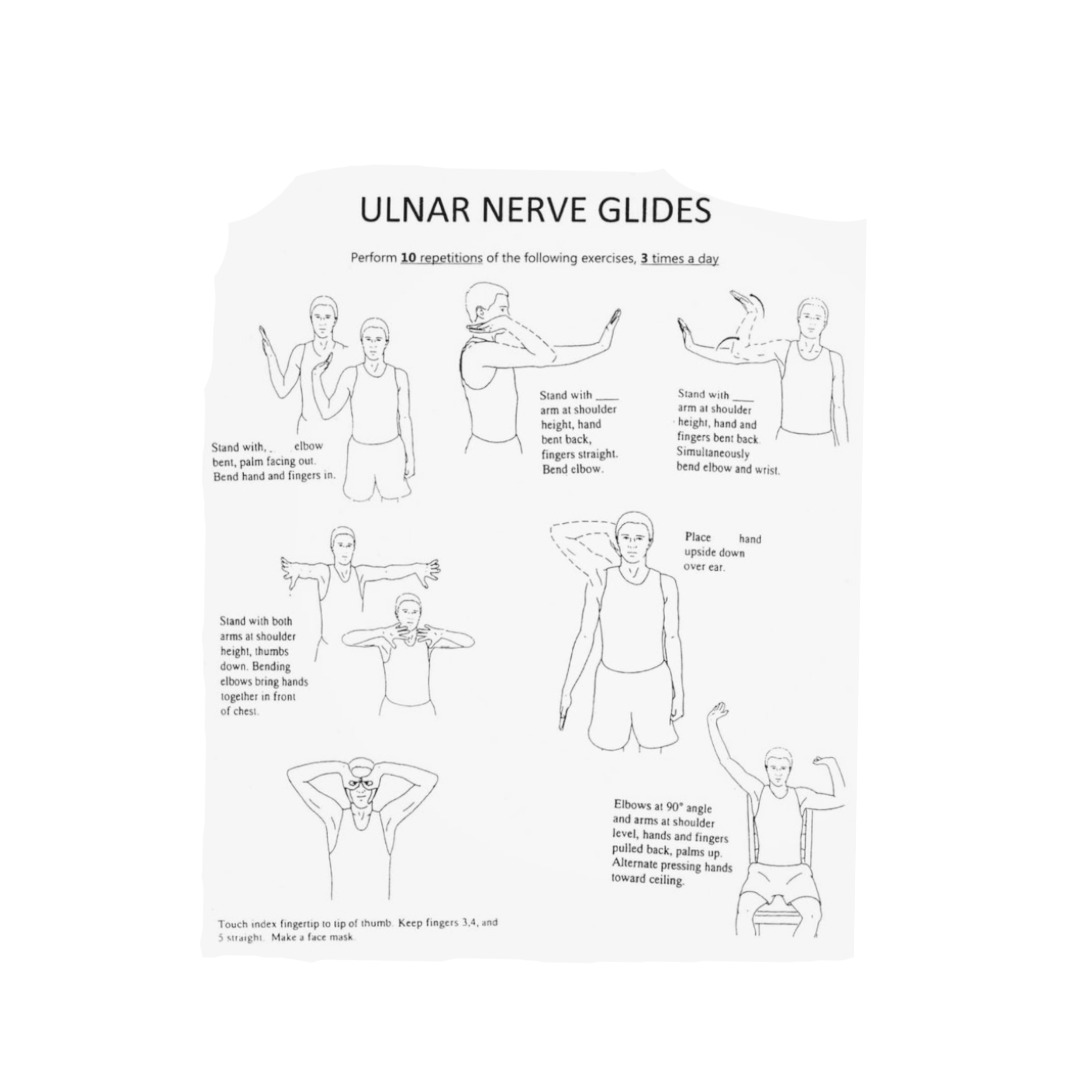
How to Floss Your Ulnar Nerve
(See attached infographic)
Remember:
Gentle. Slow. Respectful.
No jerking
No forcing
No dramatic flair
If it hurts, back off.
Repeat 5–10 times, 2–3 times per day.
You should feel a mild stretch or sensation — not pain.
Tips for success
Keep movements slow and controlled.
You may feel light tingling — that’s okay. Pain is not.
Breathe normally; don’t hold your breath.
Why This Helps
Ulnar nerve flossing can help because it:
✨ Promotes smooth nerve mobility
✨ Reduces irritation and compression
✨ Improves sensation along the inner arm and hand
✨ Helps restore stronger, more reliable signals to your grip
✨ Makes everyday tasks feel less “weird” again
Consistency > Intensity
Just like flossing your teeth once won’t prevent cavities, doing this regularly — even if it’s gentle and barely breaks a sweat — makes a difference.
Nerves prefer predictable, respectful movement. So go slow, be consistent, and honor the system that helps your arm actually work well.
Want Better Results?
Pair It With Supportive Topical Care
You’ll often get quicker results when surrounding tissues are calm and supported.
✨ Arnica Salve can help soothe overworked muscles along the nerve pathway
✨ Purple Grass Balm supports comfort, circulation, and recovery
Your arms will notice.
Your hands will notice.
And honestly — you’ll probably wonder why no one explained this sooner…..and for free even.
You’re welcome. 💜
A Friendly “Boring” Heads-Up
I am not a doctor. I do not play one on the internet. I did not wake up with a medical degree and a chauffeur.
And no, my website does not magically grant me medical licensure. This information is for educational purposes only — meaning I’m here to help you understand what your body might be doing, not to diagnose it, treat it, cure it, or hand out medical advice like candy at a parade. If your pain is severe, sudden, getting worse, or doing that thing where your inner voice goes, “Uhh… this feels above my pay grade,” please pause and go talk to a licensed medical professional — preferably one with diplomas on the wall, student loan debt, and malpractice insurance. Use your best judgment. Listen to your body. And when in doubt — get checked out.
But if your nerve is just acting like an overtired, overstimulated toddler who skipped their nap and is now screaming because the cup is the wrong color… this is for you. We’re about to talk flossing. No mint flavor required. 😌